The Eye and Gut Connection

Kathy Norris
D.Ir., CCII3, CAPSI
IIPA Instructor Coordinator
Texas, USA
Published: October 15, 2026
If you haven’t yet signed up for Level I Foundational Sclerology, we would be happy to hold a seat for you in an upcoming class. And if you have already completed Level I and are ready for Level II Advanced Sclerology, there is so much more waiting for you to discover about the eyes and sclera.
Here are a few interesting facts to get you thinking!
The Eye and the Gut—Is There a Connection?
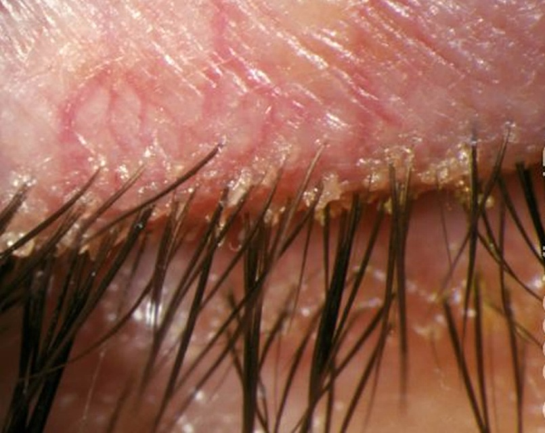
Did you know that blepharitis is inflammation of the eyelids that can cause redness, swelling, irritation, itching, and crusting around the eyelashes?
The surface of the eye and the digestive tract are both lined by specialized epithelial tissues that serve important protective and immune functions. Researchers are increasingly interested in the relationship between the gut microbiome, systemic inflammation, and ocular surface health.
That gives us something interesting to consider when looking at the person as a whole. Supporting good nutrition, digestive health, and healthy lifestyle habits may be appropriate as part of an overall wellness plan, while persistent or significant eyelid inflammation should be evaluated and treated by an eye-care professional.
Recognizing Without Diagnosing
In the IIPA model of Sclerology, based on the teachings of Leonard and Nenita Mehlmauer, students learn to become familiar with the appearance of certain eye conditions while remaining clearly within the practitioner's scope of practice.
We do not diagnose eye disease. Diagnosis and treatment of eye disease belong to qualified medical and eye-care professionals.
What we can do as natural-health practitioners is continue to look at the whole person. We can discuss appropriate diet and lifestyle choices and support general wellness while encouraging clients to obtain medical evaluation whenever an eye condition is suspected.
What Can We Learn From the Sclera?
Sclerology teaches us to carefully observe the vessels, colors, patterns, and other markings appearing in the sclera and to interpret those observations according to the IIPA Sclerology model.
Within that model, scleral markings are considered in relation to physical and emotional patterns and their possible influence on the individual as a whole. Students also learn the importance of observing changes in scleral markings over time.
One of the most fascinating aspects of studying Sclerology is realizing just how much detail is present in what we commonly call “the white of the eye.”
Every Marking Gives Us Something to Consider
In Sclerology training, we learn not to simply dismiss a marking because it appears small or insignificant. Each vessel and marking is observed in relation to its location, appearance, direction, and surrounding signs.
For example, within the Sclerology system, a marking referred to as a “resentment line” is interpreted in relation to emotional patterns and may also be considered alongside particular physical areas represented on the Sclerology chart.
It is important to distinguish this Sclerology interpretation from a medical diagnosis. A scleral vessel can influence the need to pay attention to the heart, heart-valves, or arterial disease. Some people may not be aware of the need to care for their arterial system, while the sclera vessels show us a great need to pay attention.
Ready to Learn More? Level I Foundational Sclerology returns in April 2027.
In the meantime, consider obtaining a Sclerology chart from Grand Medicine and begin familiarizing yourself with the different areas and vascular patterns you observe. Remember that a vessel that looks unusual or concerning is not, by itself, a diagnosis; concerning eye changes should always be referred for appropriate medical evaluation.
Kathy Norris and Christos Miliankos would be delighted to talk with you about Sclerology, answer questions about the program, and share information about upcoming classes.
The sclera is right there in front of us.
The question is: How much have we learned to see?